
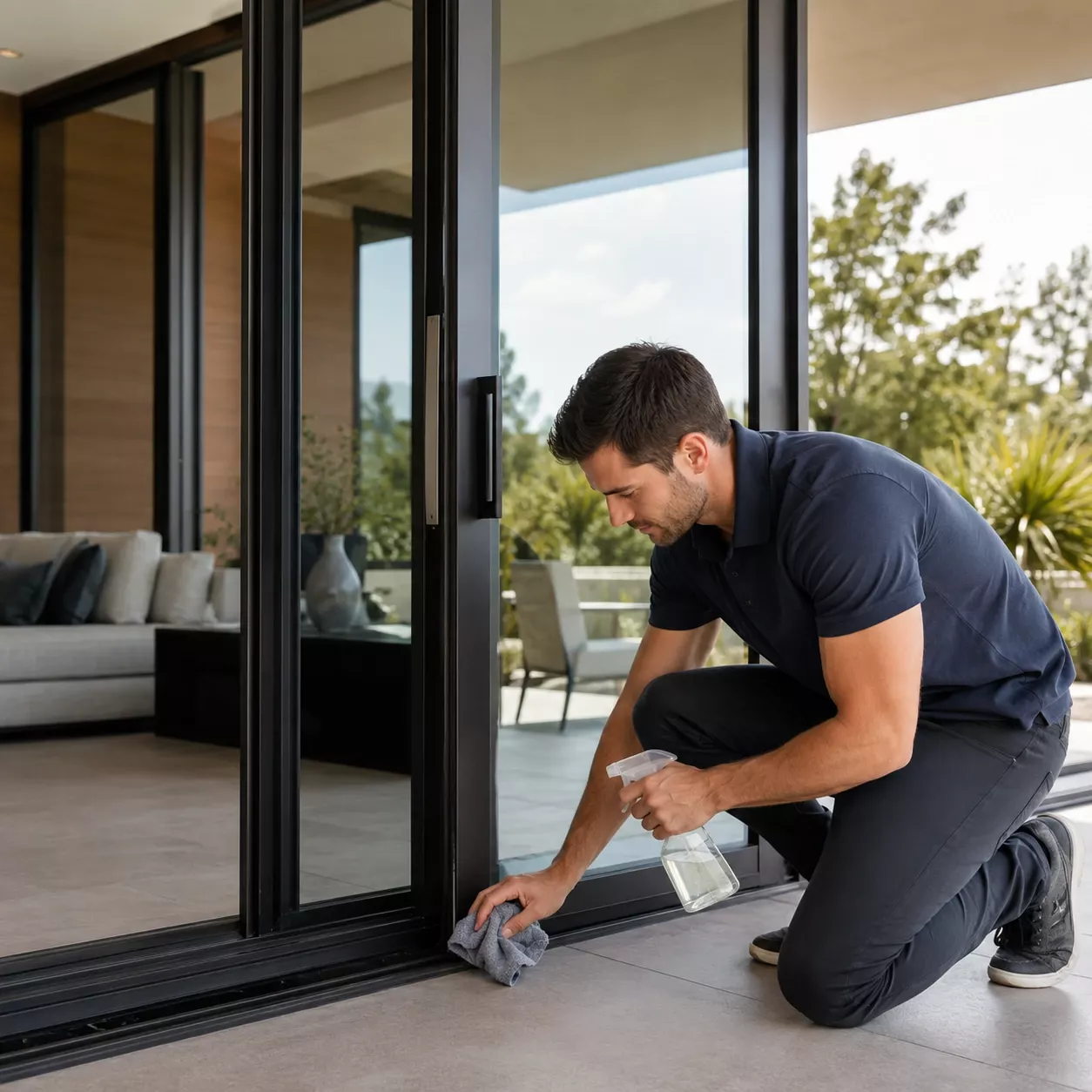
Sliding doors are designed to provide years of reliable performance, abundant natural light, and seamless indoor-outdoor living. Like any high-quality home improvement product, regular care and maintenance are essential to preserve their appearance, ensure smooth operation, and maximise their lifespan. Because the entire weight of the sliding panel is carried by rollers running along a track at floor level, the track is more exposed to dirt, sand, and debris than on most other door types, which makes consistent cleaning especially important.
Whether you have aluminium sliding doors opening onto a patio, garden, balcony, or entertaining area, following a simple maintenance routine will help keep them looking and functioning like new. This guide explains everything you need to know about cleaning, inspecting, and maintaining your sliding doors throughout the year.
Why Regular Maintenance Matters
Sliding doors are exposed to daily use and changing weather conditions. Dust, dirt, moisture, pollen, salt air, and debris can gradually affect the rollers and track if left unattended. Routine maintenance helps:
- Maintain smooth opening and closing
- Extend the lifespan of rollers and track
- Protect the frame finish
- Preserve weather seals
- Improve energy efficiency
- Prevent premature wear
- Maintain the appearance of your doors
- Reduce the likelihood of costly repairs
A few minutes of maintenance every month can significantly improve long-term performance.
Cleaning the Glass
Clean glass enhances natural light and keeps your sliding doors looking their best. For routine cleaning: remove loose dust with a soft cloth, use a mild glass cleaner or a solution of warm water and gentle detergent, wipe using a microfiber cloth or squeegee, and dry the surface to prevent streaks. Avoid abrasive cleaning pads, razor blades, solvent-based cleaners, harsh chemicals, and high-pressure washers directed at seals. Clean the glass more frequently if your home is located near the coast or a busy road.
Cleaning the Aluminium Frames
Aluminium frames are durable and corrosion-resistant but still benefit from regular cleaning. To clean the frames: wash with warm water and mild soap, use a soft sponge or microfiber cloth, rinse thoroughly with clean water, and dry with a soft towel. Do not use steel wool, abrasive powders, acidic cleaners, bleach, or strong solvents, as these products may damage the protective finish of the frame.
Keep the Track Clean
The sill track is the single most important component to keep clean on a sliding door system, since the entire weight of the moving panel rides on rollers travelling directly through it. Dirt, sand, and debris can interfere with smooth operation very quickly if not removed regularly. To maintain the track:
- Vacuum loose dirt, sand, and leaves from the channel
- Wipe the track with a damp cloth
- Remove small stones and debris that can jam the rollers
- Check drainage weep holes for blockages
Keeping the track clean allows the rollers to move freely and reduces unnecessary wear on both the rollers and the track itself.
Inspect and Lubricate Rollers
Rollers, locks, and pivot points should be inspected and lubricated periodically to ensure smooth operation. Check the rollers every few months for wear, flat spots, or debris buildup, since these are usually the first sign of a developing problem. Recommended lubrication schedule: every 6 months for typical residential use, or every 3 months in coastal or high-use environments. Use a silicone-based lubricant specifically designed for door hardware, applied sparingly to the rollers, track, locks, and handles. Avoid using heavy grease or oil-based lubricants, as they attract dust and dirt and tend to worsen sticking over time rather than fix it.
Inspect Weather Seals
Weather seals play an important role in keeping out water, dust, drafts, and noise. Inspect the seals — including the pile or brush seals between the fixed and sliding panels — regularly for cracks, splits, compression loss, loose sections, and signs of ageing. If damaged, replace the seals promptly to maintain weather resistance and energy efficiency.
Check the Hardware
Regularly inspect all hardware components to ensure everything remains secure and functions correctly. Check handles, locks, rollers, and fasteners. If any screws become loose, tighten them carefully without overtightening. If components appear worn or damaged, arrange for replacement parts before further use, since a worn roller left unaddressed can eventually damage the track itself.
Seasonal Maintenance
Spring. Remove accumulated winter debris, wash the frames and glass, vacuum the track thoroughly, inspect seals, and lubricate the rollers.
Summer. Clean the track more frequently if doors are used daily, remove pollen and dust, and check for any expansion-related stiffness in warmer weather.
Autumn. Clear leaves from the track and weep holes, inspect drainage points, and clean before colder weather arrives.
Winter. Remove moisture promptly, keep the track free from ice and debris, avoid forcing a frozen or stiff door, and inspect weather seals for effective insulation.
A seasonal maintenance routine helps your doors perform reliably throughout the year.
Protect the Finish
Modern aluminium sliding doors feature durable powder-coated finishes that require minimal maintenance. To preserve the finish: wash regularly with mild detergent, remove bird droppings promptly, avoid impact from garden tools or furniture, protect frames during renovation work, and rinse away salt deposits in coastal areas. Proper care helps maintain the original appearance for many years.
Common Issues and Simple Solutions
Door feels difficult to slide. Possible causes: dirty track, lack of lubrication, or debris in the rollers. Solution: clean the track thoroughly and lubricate the rollers.
Door drifts open or closed on its own. Possible cause: an unlevel sill track. Solution: arrange professional adjustment or levelling of the track.
Door does not close flush. Possible causes: worn or misaligned rollers, or an obstruction in the track. Solution: inspect and clean the track, and contact a professional if roller adjustment is required.
Lock feels stiff. Possible causes: dirt inside the mechanism or lack of lubrication. Solution: apply a silicone-based lubricant to the locking mechanism and operate the lock several times.
Water around the threshold. Possible causes: blocked weep holes or damaged weather seals. Solution: clear the drainage channels and inspect the seals for damage.
Maintenance Schedule
| Task | Frequency |
|---|---|
| Clean glass | Monthly or as needed |
| Clean frames | Every 2–3 months |
| Vacuum and clean track | Monthly |
| Inspect and lubricate rollers | Every 6 months |
| Inspect weather seals | Every 6 months |
| Check locks and handles | Every 6 months |
| Inspect weep holes | Quarterly |
| Professional inspection | Every 2–3 years |
Following this schedule will help keep your sliding doors operating efficiently and looking their best.
Maintenance Tips to Extend Door Life
To maximise the lifespan of your sliding doors: open and close the doors gently, avoid slamming the panel shut, keep furniture and rugs clear of the sliding path, clean the track regularly, lubricate the rollers as recommended, replace damaged seals promptly, inspect hardware periodically, and address small issues before they become major repairs. Preventive maintenance is always more cost-effective than replacing worn components.
Frequently Asked Questions
How often should sliding doors be cleaned?
Glass can be cleaned as needed, while frames should be cleaned every two to three months and the track vacuumed monthly. Homes in coastal or dusty environments may require more frequent maintenance.
What lubricant should I use?
A silicone-based lubricant is recommended for rollers, locks, and handles. Avoid heavy grease or oil-based products, which attract dirt.
Can I pressure wash my sliding doors?
No. High-pressure water can damage seals, force moisture into the track and frame, and affect the finish.
What should I do if my sliding door becomes difficult to open?
Start by cleaning the track thoroughly and lubricating the rollers. If the problem persists, have the door inspected by a qualified professional, as it may indicate roller wear or a levelling issue.
How long do sliding doors last?
High-quality aluminum sliding doors can provide decades of reliable performance when installed correctly and maintained regularly.
Why is the track more important to maintain than on other door types?
Because the full weight of the sliding panel is supported and guided by rollers running through the track, any dirt, debris, or wear in that channel has a much more immediate effect on smooth operation than it would on a hinged system.