
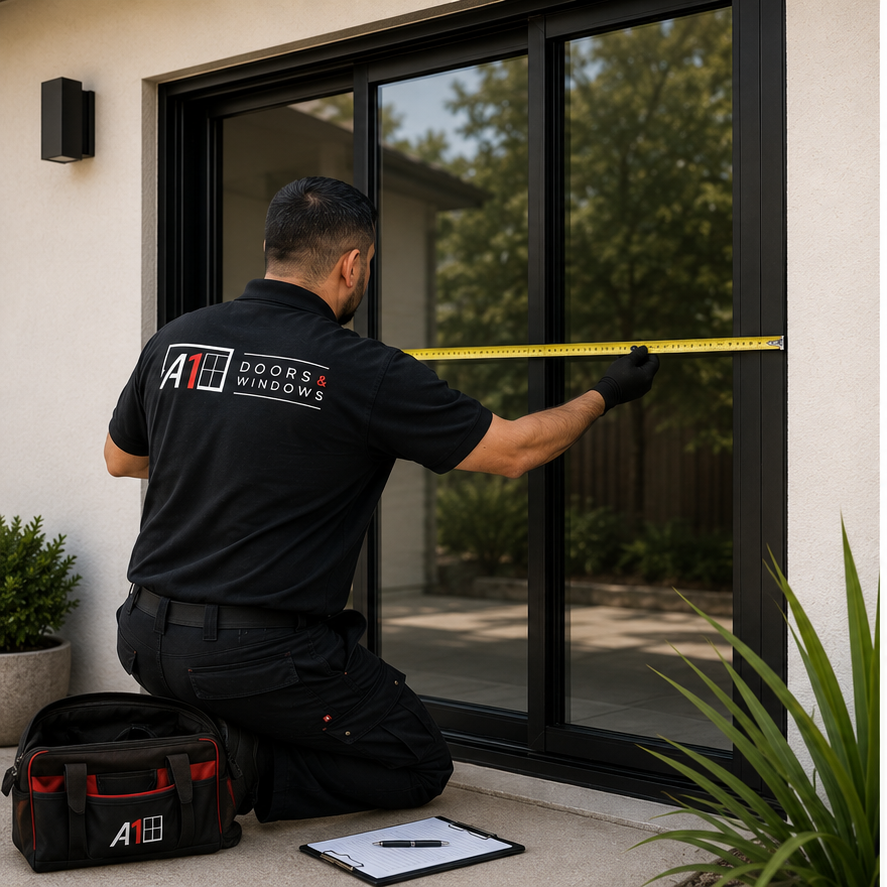
Whether you’re ordering a vinyl sliding window, a vinyl bifold window, a vinyl folding-up (awning-style) window, or a vinyl gas strut window, accurate measurements are what determine whether the finished product fits cleanly and operates smoothly. Since custom vinyl windows are manufactured to order and typically non-returnable, getting the numbers right the first time matters even more. This guide covers the general measuring process that applies across all four vinyl window types, along with a few considerations specific to each.
Tools You’ll Need
- Steel tape measure (avoid cloth or fabric tapes, which stretch)
- Notepad or measurement worksheet
- A helper for larger openings
- Ladder for higher openings
General Measuring Rules
Always measure width and height in three places each, and use the smallest measurement recorded. Older buildings especially can have openings that are slightly out of square, so don’t assume a single measurement applies across the whole frame. Measure to the nearest 1/8 inch, and double-check every figure before ordering, since custom windows are typically non-returnable once manufactured.
Step 1: Measure the Width
Measure the rough opening width at the top, middle, and bottom of the frame, from stud to stud or from the existing jamb if replacing a window. Use the smallest of the three measurements as your working width. This applies the same way whether you’re measuring for a sliding, bifold, folding-up, or gas strut window.
Step 2: Measure the Height
Measure the height at the left side, center, and right side, from the sill to the header. As with width, use the smallest measurement across the three readings.
Step 3: Check for Square
Measure both diagonals of the opening, corner to corner. If the two diagonal measurements differ by more than 1/4 inch, the opening is out of square. This matters for every window type in this guide, but it’s especially critical for sliding and bifold windows, since their tracks and panels depend on a true, square frame to operate smoothly.
Step 4: Measure Depth
Measure the depth of the opening from the interior to the exterior finished surface. This confirms the window frame will fit within the wall thickness, and is particularly important for gas strut and folding-up windows, which may require additional clearance for hardware or the swing radius of the sash.
Step 5: Note Rough Opening vs. Unit Size
Manufacturers typically require a rough opening that’s slightly larger than the actual window unit in both width and height, to allow for shimming during installation. This allowance varies by brand and product line, so always check the specific manufacturer’s spec sheet before finalizing your order.
Type-Specific Measuring Considerations
Sliding Windows
Beyond standard width, height, and square checks, confirm the track depth the manufacturer requires. When ordering sliding windows for modern homes, you must ensure the opening provides enough depth to accommodate both the fixed and operable sash panels without causing overlap issues.
Bifold Windows
Measure the finished opening rather than the rough framing when installing into an existing frame, as fabricators typically size bifold panels to the finished jamb. Additionally, measure the available clearance on the sides where the panels will stack when open. If you are upgrading to custom bifold windows for modern homes, the bifold hardware demands adequate room to fold without obstruction.
Folding-Up Windows
Measure the height clearance directly above the opening, checking both the inside and outside. You must confirm the sash holds enough room to swing upward and outward without striking an overhang, soffit, or interior obstruction. When installing premium folding up windows for patios and counters, also note the specific swing radius dictated by the manufacturer, as this varies by sash size and hinge type.
Gas Strut Windows
Standard opening measurements only tell half the story here. Check the clearance required for the strut mechanism itself, evaluating the space when the window sits closed and at its maximum open angle. If you plan to install large gas strut windows for natural light and airflow, confirm that adjacent trim, blinds, or hardware will not interfere with the strut mounting points.
Sizing Reference at a Glance
| Measurement | Sliding | Bifold | Folding-Up | Gas Strut |
|---|---|---|---|---|
| Reference point | Rough opening | Finished jamb (typical) | Rough opening | Rough opening |
| Depth consideration | Track depth for panels | Stacking clearance at sides | Swing clearance above | Strut mounting clearance |
| Square check | Critical | Critical | Important | Important |
| Extra clearance needed | Track allowance | Panel stack allowance | Upward swing radius | Strut range of motion |
Common Measuring Mistakes
- Measuring only once instead of at three points per dimension
- Forgetting to check for square using diagonal measurements
- Confusing rough opening size with actual window unit size
- Not accounting for swing radius on folding-up or gas strut windows
- Failing to check panel stacking clearance on bifold installations
Final Thoughts
The core measuring process is the same across vinyl sliding, bifold, folding-up, and gas strut windows: measure width, height, and diagonals at multiple points, and use the smallest readings. What changes is the additional clearance each hardware type needs to operate properly once installed. Because vinyl windows are typically custom-manufactured to order, there’s little room to correct a sizing error after the fact. When in doubt, measure twice, confirm against the manufacturer’s rough opening specifications, and if the opening shows signs of being significantly out of square, have it assessed by a professional before placing your order.