
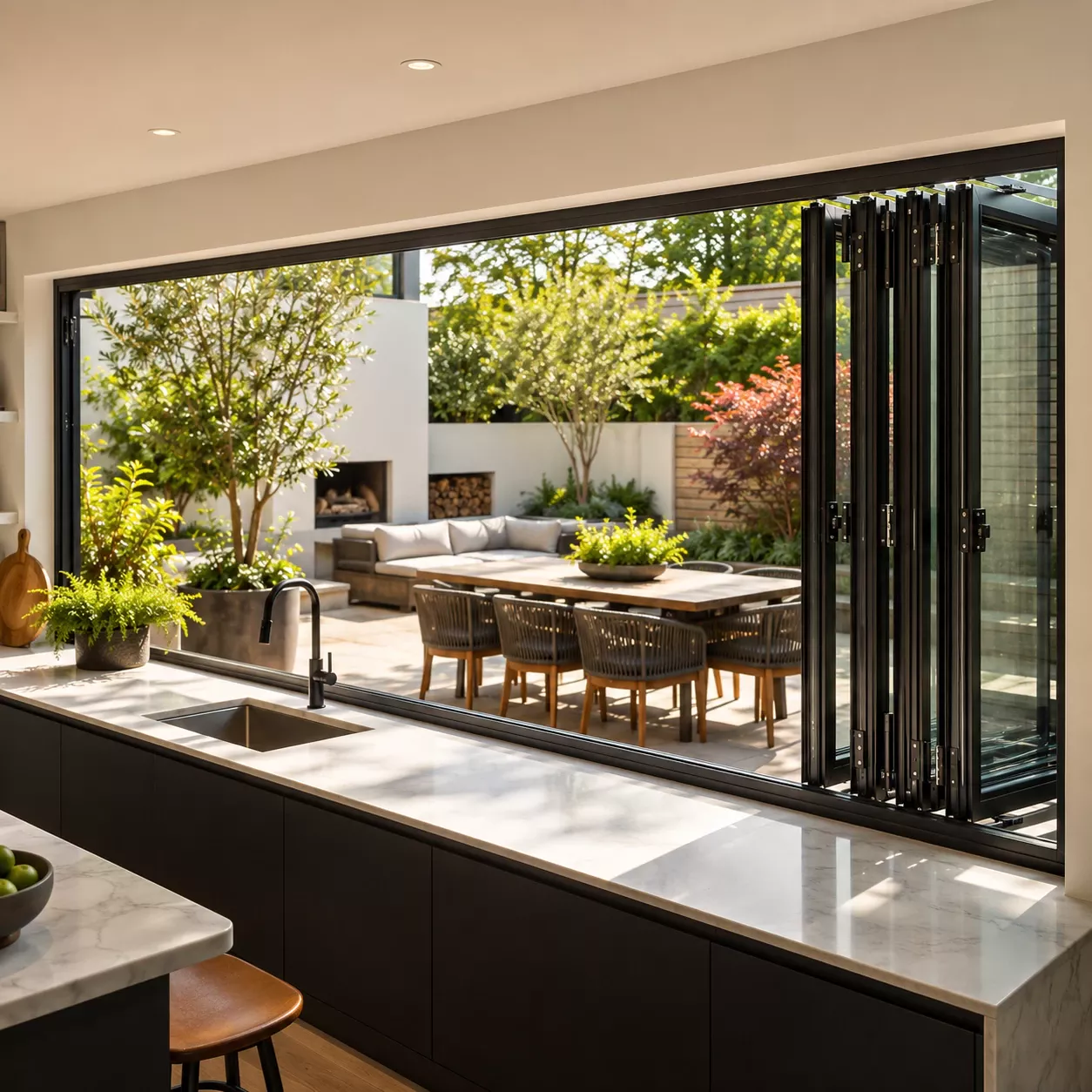
Bifold windows have quickly become one of the most sought-after window styles in modern residential and commercial design. Unlike traditional windows that swing, slide, or tilt open, custom bifold windows for residential and commercial spaces fold back on themselves in a concertina motion, creating a wide, uninterrupted opening between indoor and outdoor spaces.
Their rising popularity comes down to lifestyle: homeowners increasingly want spaces that blur the line between the kitchen and the patio, the bar and the beer garden, the home office and the courtyard. Bifold windows deliver that connection without the bulk of a full door system, making them a Favorite for kitchen pass-throughs, server counters, home bars, and entertaining areas.
This guide is built for homeowners, renovators, builders, and designers who want a clear, practical understanding of bifold windows: how they work, where they perform best, what they cost, and how to choose the right configuration. By the end, you’ll know exactly what to look for before requesting a quote.
What Are Bifold Windows?
A bifold window is a window system made up of two or more glazed panels connected by hinges, allowing the panels to fold flat against each other as they open. Rather than sliding along a single track or swinging outward on one axis, the panels concertina to one or both sides of the frame, stacking compactly against the wall or window jamb.
This folding action allows bifold windows to open almost the entire width of the frame
something sliding or awning windows simply cannot achieve. When closed, a bifold window looks and performs like any other quality window, with weatherproof seals and secure locking points at each panel junction.
The key difference from traditional windows lies in the opening mechanism itself. A single-hung or double-hung window opens vertically within its own frame. Compared to traditional sliding window alternatives that open horizontally but only ever expose half the total opening, or awning windows that project outward on a hinge at the top, a bifold window is designed specifically to maximize the clear opening. This makes it far better suited to spaces where airflow, light, and a true indoor-outdoor connection matter more than compact styling alone.
How Do Bifold Windows Work?
Folding Panel Mechanism
Each panel in a bifold window is connected to its neighbor by a set of hinges, similar in principle to a bifold door. As the leading panel is pushed or pulled, it drags the connected panels along with it, folding them concertina-style into a stacked position at one or both ends of the opening.
Track System
Bifold windows rely on a top-hung or bottom-rolling track system. In most quality aluminum bifold windows, the weight of the panels is carried by rollers running along the top track, with a bottom guide channel keeping the panels aligned and preventing them from swinging loose. This top-hung design tends to operate more smoothly over time and keeps the sill area clear of heavy roller hardware, which also makes cleaning easier.
Opening Configurations
Bifold windows can be configured to stack to the left, to the right, or split from the center outward to both sides. The right configuration depends on the surrounding structure — for example, a server window above a kitchen bench often stacks upward or to one side to keep the counter clear, while a large wall opening might use a center-stacking configuration to balance the folded panels evenly.
Common Operating Styles
Most bifold windows are designed as top-hung units, though some smaller configurations use a bottom-rolling track. Panel counts typically range from two to six or more, depending on the width of the opening, with wider spans requiring additional panels and correspondingly more robust hardware to support them.
Benefits of Bifold Windows
Maximize Natural Light
Because bifold windows can open almost their entire width, they let in significantly more daylight than a standard sliding or awning window of the same size, both when open and thanks to slim aluminum sightlines when closed.
Improve Ventilation
A fully or partially opened bifold window creates a much larger airflow path than a sliding sash, helping rooms cool down faster and stay fresher, particularly in kitchens, living rooms, and covered outdoor bars.
Create Indoor-Outdoor Living
Bifold windows are a natural match for the indoor-outdoor lifestyle that’s become central to contemporary home design, effectively turning a wall opening into a server, bar front, or open-air connection point.
Save Space
Unlike an awning window that projects outward or a casement window that swings into a room, bifold panels stack compactly against the frame, leaving no panel intruding into usable space.
Modern Appearance
Slim aluminum frames, clean folding lines, and a range of contemporary finishes give bifold windows a distinctly modern look that suits new builds and renovations alike.
Increase Home Value
Indoor-outdoor features are consistently attractive to buyers, and a well-installed bifold window — particularly in a kitchen or entertaining area — can be a genuine selling point.
Easy Operation
Quality hardware and smooth-rolling tracks mean most bifold windows, even larger multi-panel units, open and close with minimal effort.
Where Can You Install Bifold Windows?
Kitchen Pass-Through Windows
One of the most popular applications, allowing food and drinks to be passed directly from the kitchen to an outdoor dining or entertaining area.
Outdoor Entertaining Areas
Ideal for connecting a living space to a deck, alfresco area, or courtyard, especially when paired with matching bifold or stacking doors.
Bars
A common feature in home bars and server counters, where the folded panels create an open counter-style service point.
Patios
Bifold windows above a patio bench or benchtop bring the same server function to outdoor entertaining zones.
Cafés & Restaurants
Widely used in hospitality settings to open a server or counter to outdoor seating, particularly in warmer climates or seasonal outdoor dining setups.
Home Offices
A bifold window can open a home office to a garden or courtyard view, improving airflow and natural light during the workday.
Living Rooms
Larger bifold window configurations can open a living area to an adjoining outdoor space, similar to a bifold door but without the full floor-to-ceiling footprint.
Types of Bifold Windows
Aluminum Bifold Windows
The most common and widely recommended option, valued for strength, slim sightlines, and long-term durability.
Custom Bifold Windows
Built to specific openings, panel counts, and configurations where standard sizing doesn’t fit the structure or design intent.
Pass-Through Bifold Windows
Designed specifically for server-style openings between a kitchen and an outdoor or adjoining space.
Server Windows
A close relative of the pass-through window, typically installed above a benchtop for serving food and drinks.
Large Opening Bifold Windows
Multi-panel systems engineered to span wide openings, often used in living areas, bars, and commercial server counters.
Bifold Windows vs Sliding Windows
| Feature | Bifold | Sliding |
| Opening Width | Up to 90–100% of the frame | Typically up to 50% (one panel always overlaps) |
| Ventilation | Excellent — full-width airflow | Moderate — limited to half the opening |
| Space Required | Panels stack compactly against the frame | Panels slide within the frame, no external clearance needed |
| Modern Design | Distinct concertina look, strong indoor-outdoor feel | Clean, minimalist, widely used in most home styles |
| Best Applications | Server counters, bars, entertaining areas | General living areas, bedrooms, standard rooms |
Bifold Windows vs Awning Windows
Awning windows are hinged at the top and project outward, making them a strong option for ventilation during light rain since the panel itself deflects water. However, an awning window only ever opens a portion of its total glass area and always projects into the space outside the frame, which can interfere with screens, blinds, or nearby pathways.
Bifold windows, by comparison, open almost the entire width of the frame and stack flat against the wall rather than projecting outward. This makes bifold windows the better choice where maximum airflow and an open, connected feel are priorities — such as server counters and entertaining areas — while awning windows often remain a practical choice for smaller, less-trafficked openings like bathrooms or laundries where rain protection while venting matters more than opening width.
Choosing the Right Size
Standard Sizes
Most manufacturers offer a set range of standard widths and heights based on common wall openings, which tend to be more cost-effective than fully custom sizing.
Custom Sizes
For non-standard openings — wider server counters, unusual wall dimensions, or specific architectural requirements — custom-sized bifold windows can be manufactured to exact measurements.
Measuring Tips
Always measure the structural opening at multiple points (top, middle, and bottom, plus both sides) since older walls can be slightly out of square. Measure to the smallest dimension found and confirm whether the quoted size refers to the structural opening or the finished frame size.
Common Mistakes
The most frequent errors include measuring only once instead of at multiple points, forgetting to account for reveals or finishing trims, and failing to check for obstructions like power points, benchtops, or existing fixtures that could interfere with the folded panel stack.
How Much Do Bifold Windows Cost?
Bifold window pricing varies considerably based on several factors, and because material costs and supplier pricing change over time, it’s best to request a current, itemized quote rather than rely on general figures. That said, here’s what typically drives the price:
Material
Aluminum framing generally sits at a different price point than uPVC or timber, with aluminum often preferred for its strength-to-weight ratio in larger openings.
Size
Wider openings require more panels, additional hardware, and stronger structural support, which increases both material and labor costs.
Glass Options
Upgrades such as double glazing, Low-E coatings, or tinted and frosted glass all affect the final price.
Installation
Costs vary depending on whether the opening is a straightforward retrofit or requires structural modification, waterproofing, or extra framing work.
Customization
Non-standard sizes, custom colors, and upgraded hardware finish typically add to the base cost of a standard configuration.
Are Aluminum Bifold Windows Worth It?
Durability
Aluminum frames resist warping, cracking, and swelling far better than timber over the long term, making them well suited to Australian conditions.
Weather Resistance
Quality aluminum bifold systems are engineered with weather seals and drainage channels to handle wind-driven rain without compromising the folded panel mechanism.
Low Maintenance
Unlike timber, aluminum doesn’t need repainting, sanding, or sealing — an occasional wipe-down and track cleaning is generally all that’s required.
Energy Efficiency
Modern aluminum frames often incorporate thermal breaks, and when paired with double glazing or Low-E glass, can perform comparably to other framing materials for insulation.
Powder-Coated Finishes
Powder coating gives aluminum frames a durable, fade-resistant color finish available in a wide range of tones to match any home’s exterior or interior palette.
Design & Glass Options
Clear Glass
The standard choice for maximum light transmission and unobstructed views.
Low-E Glass
A coated glass that reflects heat while still allowing light through, helping reduce energy costs in both hot and cold climates.
Double Glazing
Two panes of glass with an insulating air gap between them, improving thermal performance and reducing outside noise.
Tinted Glass
Reduces glare and heat transmission while adding a subtle color tone to the glazing.
Frosted Glass
Provides privacy while still allowing light through, often used in bathrooms, ensuites, or street-facing openings.
Frame Colors
Powder-coated aluminum frames are available in a broad spectrum of colors, from classic whites and blacks to woodgrain finishes and bold custom tones.
Hardware Finishes
Handles, latches, and rollers can typically be finished in a range of metals and colors to match the frame or complement other hardware in the home.
Installation Considerations
Structural Opening
The surrounding wall structure needs to be assessed to confirm it can support the weight and span of the bifold window, particularly for wider, multi-panel configurations.
Waterproofing
Proper flashing and sealing around the frame is essential to prevent water ingress, especially for openings exposed to direct weather.
Building Codes
Local building regulations may dictate requirements around glazing safety, wind loads, and energy performance, so it’s worth confirming compliance before installation.
Professional Installation
Maintenance Tips
Cleaning Tracks
Regularly clear dust, dirt, and debris from the tracks to keep the folding panels rolling smoothly and prevent premature wear.
Lubrication
Periodically lubricating rollers and hinges helps maintain smooth operation and reduces strain on the hardware.
Checking Rollers
Glass Care
Clean glass with a non-abrasive cleaner and soft cloth to avoid scratching, particularly on tinted or coated glass surfaces.
Seasonal Maintenance
After storms or extreme weather, check seals, tracks, and drainage channels to ensure nothing has been dislodged or blocked.
Common Questions Before Buying
Can they be customized? Yes, panel count, size, color, glass type, and hardware can all be tailored to suit the opening and design intent.
Are they energy efficient? Yes, particularly when specified with double glazing, Low-E glass, and thermally broken aluminium frames.
Are they secure? Quality bifold windows include multi-point locking systems at each panel junction, providing security comparable to other premium window styles.
How long do they last? With proper installation and regular maintenance, aluminum bifold windows can last several decades without significant performance issues.
Why Choose A1 Doors & Windows?
Frequently Asked Questions
What are bifold windows?
Bifold windows feature multiple hinged glass panels that fold together in a concertina style, creating a wide, open connection between indoor and outdoor spaces
Are bifold windows expensive?
Cost depends on size, material, glass type, and customization. They’re generally comparable to other premium window styles, with pricing best confirmed through a specific quote.
Are bifold windows energy efficient?
Yes, especially when fitted with double glazing, Low-E glass, and thermally broken aluminum frames.
Can bifold windows open completely?
Bifold windows can open almost their entire width — typically far more than sliding windows — though a small section of frame remains where the panels stack.
What’s the difference between bifold and sliding windows?
Bifold windows fold concertina-style to open nearly the full width of the frame, while sliding windows move horizontally but only ever expose about half the opening.
Are aluminum bifold windows better than uPVC?
Aluminum is generally stronger and better suited to larger openings, with lower long-term maintenance, while uPVC can offer strong thermal performance at a different price point. The best choice depends on the specific project and priorities.
How long do bifold windows last?
With quality materials, proper installation, and regular maintenance, aluminum bifold windows can last several decades.
Can bifold windows be customized?
Yes — size, panel configuration, glass type, frame color, and hardware can all be tailored to the opening and design.
Bifold windows offer a distinctive combination of natural light, ventilation, and indoor-outdoor connection that few other window styles can match. Bifold windows work well in kitchen serveries, home bars, living rooms, and entertainment areas. They help homeowners and businesses open up their spaces while maintaining security and weather protection.
Considering bifold windows for your next project? Explore A1 Doors & Windows made-to-order aluminum bifold windows, or get an itemized window quote from our specialists tailored to your exact opening and design needs.